 Thrive Safe
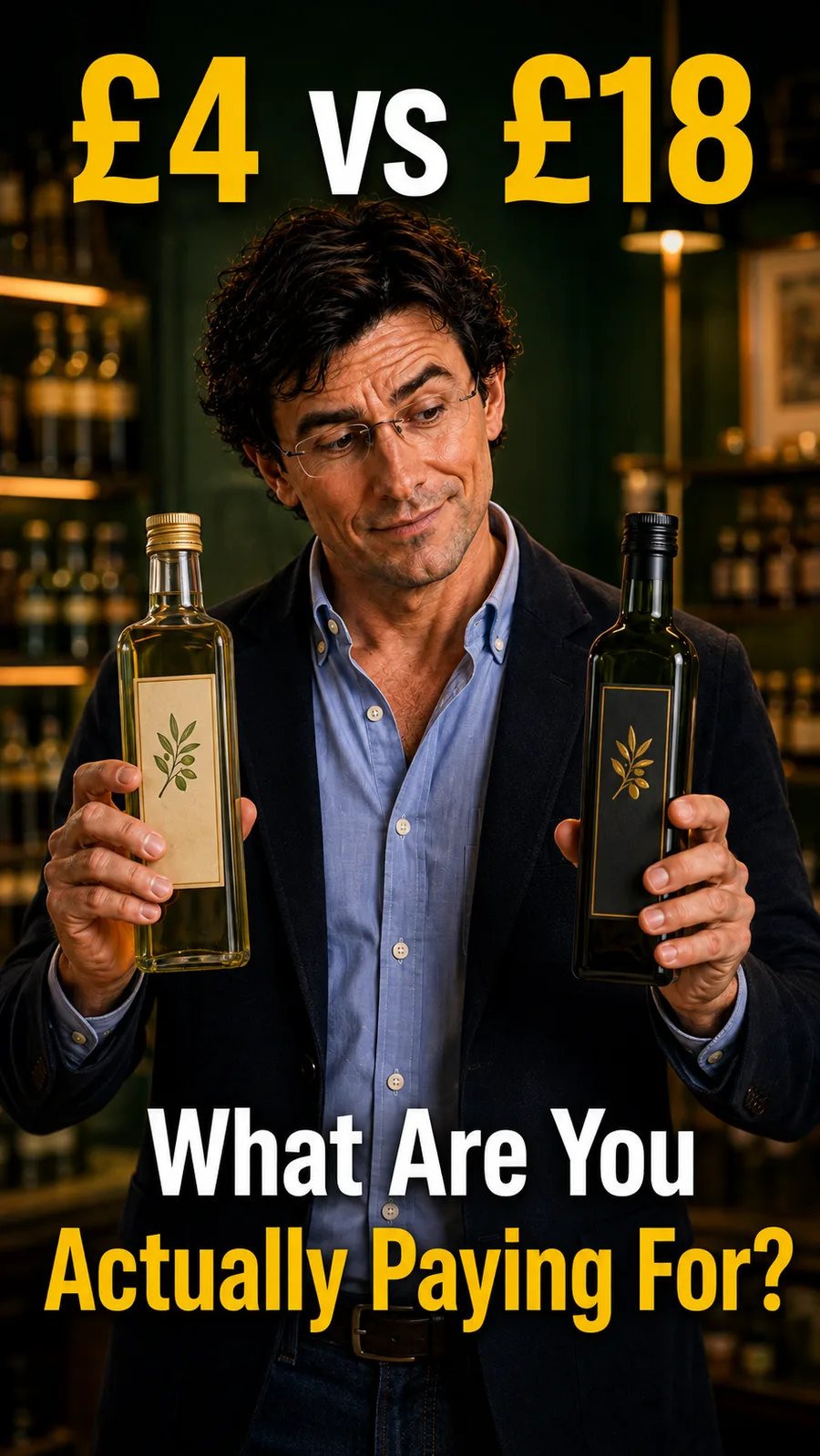
There's a good chance you have a bottle of olive oil in your kitchen right now that isn't what you think it is.
Not because it's fake. Not because you were cheated. But because the label says "extra virgin" — and that phrase means a lot less than most of us assume.
I bought two bottles recently. One cost £4. One cost £18. Both said extra virgin. Standing in the aisle, I wondered: what am I actually paying for?
I went looking for the real answer. Here's what I found.
What "Extra Virgin" Actually Means
Extra virgin has a legal definition. It means the oil was cold-pressed from fresh olives without heat or chemicals, and the acidity level at the time of testing fell below 0.8 percent.
Notice what that definition doesn't include.
It says nothing about which country the olives came from. Nothing about how fresh they were when pressed. Nothing about how long the oil sat in a warehouse before it reached your shelf. And critically — nothing about how it tastes when you open it.
A bottle of olive oil can be blended from multiple countries, pressed months ago, stored in stainless steel tanks under suboptimal conditions, and still carry the extra virgin label — provided it met the acidity threshold on the day someone tested it.
That's the gap between what the label says and what you're actually getting.
The Secret Nobody Mentions: Olive Oil Goes Off
Here's the thing most people genuinely don't know, because nobody tells you at the supermarket.
Olive oil is a fresh product.
Unlike wine, it doesn't improve with age. It degrades. The polyphenols and antioxidants that make good olive oil genuinely good for you — and that give it that distinctive peppery, grassy, slightly bitter kick — break down over time when exposed to heat, light, and oxygen.
The finest olive oils are pressed from olives harvested at peak ripeness, cold-pressed within hours of picking, bottled quickly in dark glass, and ideally consumed within twelve to eighteen months of the harvest date — not the bottling date, the harvest date.
Most labels show a "best before" date. Almost none show a harvest date. And there's a reason for that.
Where the Money Actually Goes
So what are you paying for when you spend £18 on olive oil instead of £4?
The olives themselves. Premium oils are often made from olives harvested earlier in the season — when they're less ripe, lower yield, greener in flavour, and considered higher quality by producers who care about the result. Later harvests produce more oil per tree, which is why bulk production favours them.
Speed and care in production. Time between harvest and press matters enormously. The finest oils get pressed within hours. The difference in flavour and nutritional quality between oil pressed the same day and oil pressed three days later is significant.
Provenance. Single-estate oils — where every olive comes from one farm, one region, sometimes one specific grove — command a premium because you can trace exactly what you're getting. It's similar to why a single-origin coffee costs more than a supermarket blend.
Packaging. Dark glass slows light degradation. Heavier bottles suggest a producer who cares about the contents surviving the journey. A tin protects even better than glass.
Smaller batches. Quality production doesn't scale cheaply. A small Sicilian producer making fifteen thousand bottles a year simply cannot price the same as a multinational blending millions.
The Uncomfortable Truth About Cheap Olive Oil
Industry studies and investigative journalists have repeatedly found that a meaningful percentage of olive oil sold as extra virgin in major markets fails to meet extra virgin standards when independently tested — not at bottling, but by the time it reaches consumers.
I'm not saying the bottle in your kitchen is fraudulent. I'm saying the label alone is not enough to tell you what you're actually getting.
The single most useful piece of information on an olive oil bottle — the harvest date — is the one piece of information most bottles don't show you.
So Is the £18 Bottle Worth It?
Depends entirely on what you're doing with it.
Cooking at high heat? Honestly, the delicate compounds that make premium olive oil worth the premium are destroyed above roughly 180 degrees anyway. A decent, reasonably fresh mid-price oil does the job just as well.
Drizzling over a salad, finishing a pasta, dipping good bread? Here, freshness and quality make a real, tasteable difference. A genuinely fresh, high-quality oil with a harvest date on the label tastes completely different to a blended, aged supermarket bottle — greener, more complex, with that characteristic peppery finish at the back of the throat that tells you the polyphenols are still alive.
The question isn't "is expensive olive oil better?" The question is: better for what?
What to Actually Look For
Before you buy another bottle, check for these:
- Harvest date — not just best before, but when the olives were actually picked. If it's not there, that tells you something.
- Country of origin — ideally a single country, ideally a single region. "Product of EU" on a premium-priced bottle is a red flag.
- Dark glass or tin — clear bottles let light in. Light is the enemy of olive oil.
- An actual producer name — not just a supermarket own-brand. Someone should be standing behind what's in the bottle.
The Thrive Safe Moment
Understanding a product isn't about finding fault with it. The cheap bottle isn't a scam. The expensive bottle isn't a guarantee. The label isn't lying — it's just not telling you everything.
That's exactly the gap Thrive Safe exists to close.
Point your camera at a product and instead of a score or a warning, you get a straight answer to the question you actually have: what am I really paying for?
Because luxury isn't always about what's inside the bottle. Sometimes it's about freshness, provenance, craft, and the story of how something got from a hillside in Sicily to your kitchen table.
Understanding where your money goes helps you decide what matters most to you.
I'm Professor Sage, from Thrive Safe.
And remember — curiosity is healthier than fear.
Ready to understand what you are really buying? Try Thrive Safe — free, at thrivesafe.app.